


Lets Talk Scientific Classification!
Scientific classification is a method used to group and categorize organisms into groups such as genus or species. These groups are used to portray information to the reader about the relationship of the organism to other organisms. As humans we have a basic need to understand and categorize things. Carolus Linnaeus is known as the father of scientific classification and grouped species according to shared physical characteristics. We use slightly more modern techniques these days, but many things have remained unchanged.
This first part is a little bit boring, but just stay with me here. I promise it will get more interesting! So lets start at the top and work our way down.
At the very top of the ranking system is: Life - the characteristic that distinguishes objects that have signaling and self-sustaining processes from those that do not.
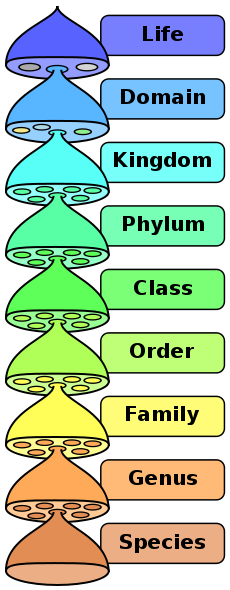
Domain - A domain (also superregnum, superkingdom, empire, or regio) is the highest taxonomic rank of organisms. There are three-domains: Archaea, Bacteria and Eukarya.
The Archaea are a group of single-celled microorganisms. The Bacteria are a large domain of prokaryotic microorganisms (organisms whose cells lack a cell nucleus). Every other living organism falls into the Eukarya, organisms whose cells contain complex structures enclosed within membranes.
Kingdom – Originally we classified organisms into two kingdoms, Kingdom Vegetabile and kingdom Animalia. But as our knowledge and technology have grown over the centuries, today we currently recognize six kingdoms: Animalia, Plantae, Fungi, Protista, Archaea, and Bacteria. For the purposes of this blog, we are going to single out the Kingdom Animalia. (Things are starting to pick up a little bit here!)
Phylum – A phylum is the primary subdivision of a taxonomic kingdom, grouping together all classes of organisms that have the same body plan. Kingdom Animalia contains approximately 35 phyla (In case you were wondering, the Kingdom Plantae contains 12 phyla.) Most of the phylums in kingdom Animalia are small and contain the worm-like creatures, mollusks and arthropods.
But the phylum Chordata is of special interest to us as it contains all of the animals that have a notochord. What is a notochord, you ask? The notochord is a flexible rod-shaped body found in embryos of all chordates and defines the primitive axis of the embryo. Notochords were the first "backbones" serving as support structures in chordates and were advantageous to primitive fish-ancestors because they were a rigid structure for muscle attachment, yet flexible enough to allow movement. In some chordates, it persists throughout life as the main axial support of the body, while in most vertebrates it becomes the nucleus pulposus of the intervertebral disc. There are two kinds of Chordates: Vertebrate Chordates and Invertebrate Chordates, also known as sub-phylum Vertebrata (or Vertebrates) and sub-phylum Invertebrata (or Invertebrates). So lets just concentrate on sub-phylum Vertebrata to keep things moving here and in the interest of keeping everyone awake!
Class - There are five classes of vertebrate animals. Mammals, Birds, Fish, Amphibians and Reptiles.
Mammals – air breathing, endothermic (can maintain their body temp) have hair/fur, give live birth (except platypus and echidnas that lay eggs) and feed young via mammary glands. Examples include primates (including humans), cats, dogs, elephants, bears, horses, rodents, whales, seals and sea lions, manatees (Trichechus manatus) and dolphins
Birds – air breathing, endothermic, feathered, lay hard-shelled eggs, and are two-legged. I'm sure most people recognize these but examples include: the European bee-eater (Merops apiaster), ostrich, parrots, penguins, songbirds, waterfowl, eagles, owls and hornbills.
Reptiles – air breathing, ectothermic (depend upon their environment for body temp), have scales and claws on feet (if they have feet), most are semi-aquatic to terrestrial but a few species are adaptive to a mostly aquatic lifestyle but still must surface occasionally for air. Turtles, such as the Blanding's turtle (Emydoidea blandingii), snakes, lizards, crocodilians and tuataras are all reptiles.

Amphibians – ectothermic, lack scales and claws, most have four legs (some like the aquatic sirens have two, while the caecilians may lack legs), most lay jelly-like eggs, most have a 2-stage lifecycle where the young undergo metamorphosis from a larval form with gills to an adult air-breathing form with lungs, most are able to take in oxygen through their skin but some do not even have lungs (all of the Plethodontid salamanders are lungless). Frogs, like this smoky jungle frog (Leptodactylus pentadactylus), salamanders and caecilians are the three major types of amphibians.
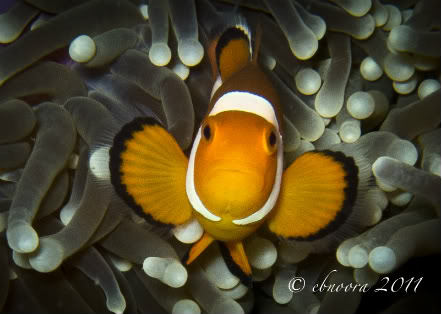
Fish - ectothermic, scales (most), have fins instead of legs, aquatic, live-bearers or lay jelly-like eggs, able to breathe under water. Examples of this Class include bass, trout, guppies, lungfish, sturgeon, lionfish, sharks, tuna, eels, catfish, seahorses and the Ocellaris clownfish (Amphiprion ocellaris) below.
Order – Order is the next level of classification and narrows the animals down even more to similar looking creatures. For example, within the reptiles, there are four orders:
- Crocodilia — crocodiles, gharials, caimans and alligators: 23 species
- Sphenodontia — tuataras from New Zealand: 2 species
- Squamata — lizards, snakes and amphisbaenids ("worm-lizards"): about 7,900 species
- Testudines — turtles and tortoises: approximately 300 species
Family – After Order comes Family and was named as such because of the very close relationship of animals within this group. For example the Order Artiodactyla is broken up into ten Families:
- Antilocapridae – pronghorns
- Bovidae – antelopes, cattle, goats, sheep,
- Camelidae – camels
- Cervidae – cervids, caribou, deer, moose,
- Giraffidae – giraffes
- Hippopotamidae – hippopotamuses
- Moschidae – musk deer
- Suidae – hogs, pigs
- Tayassuidae – peccaries
- Tragulidae – chevrotains
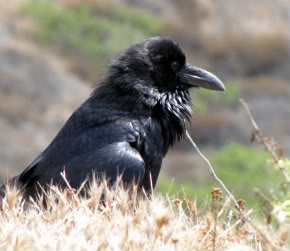
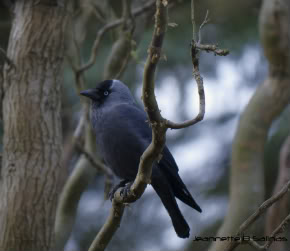
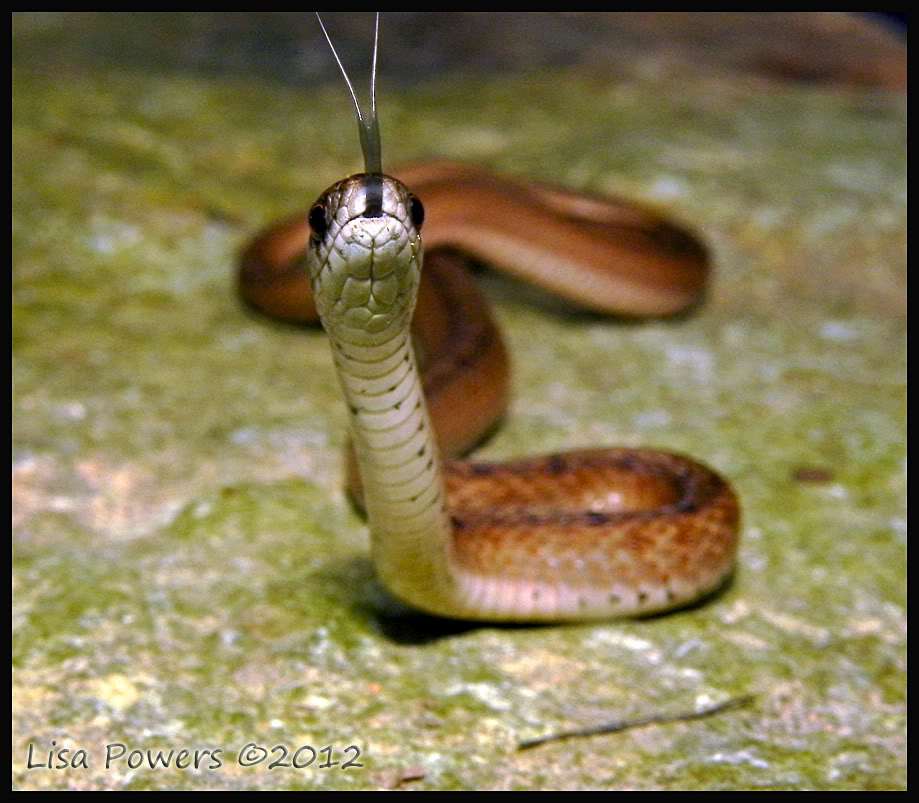
The Genus (plural Genera) and species make up the scientific name (specific epithet) of an animal and allow us to know what creature we are speaking of no matter if it is a brownsnake (Storeria dekayi) from North America or a deadly venomous brown snake (Pseudonaja textiles) from Australia. Animals within Genera are closely related to each other like the common raven (Corvus corax) below, house crow (Corvus splendens), and Western jackdaw (Corvus monedula). Generally animals of different species may not interbreed and produce fertile offspring. Offspring produced from this type of mating is called a hybrid, for example, a mule.

Subspecies is one level below species, but does not ever stand by itself; it must be attached to a Genus and species. A species may have no subspecies (monotypic) or it may have several sub-species. Organisms that belong to different subspecies of the same species are capable of interbreeding and producing fertile offspring, but they often do not interbreed in nature due to geographic isolation or other factors. Animals at this level of classification may be hard to pinpoint to a single subspecies. Animals that are the resultant offspring from two subspecies are termed intergrades and are quite common particularly among snake species like the milksnakes and copperheads of North America, and some birds such as warblers.
 .
. 
When writing the scientific name of an animal, it is proper to capitalize the Genus and put the species and subspecies in lowercase letters, for example, the proboscis monkey (Nasalis larvatus). The specific epithet is also usually italicized, in parenthesis or sometimes both.
Scientific classification is a purely human system and as we find out more (through DNA analysis) about the relationships between animals, the classifications will change. The American toad was once called Bufo americanus but has been placed into a new Genus and is now called Anaxyrus americanus. The Genus Bufo has been reserved for Old World species. And while this is very aggravating for those of us who learned it as Bufo americanus, it clearly reflects the geological divide between the Old and New World species.
Within all of these levels there are also sublevels and supra-levels, but you would just about need a degree in biology to understand them all. So let us review in a more simplified manner using a real organism, the Eastern Cougar that was recently declared extinct by the U.S. Fish and Wildlife Service -
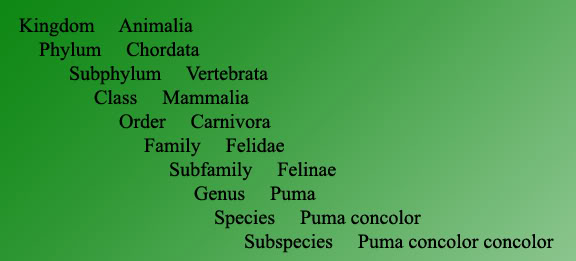
It seems like a very complicated system at first glance, but it is really designed to highlight the differences and similarities of living organisms to one another. We at Project Noah hope this blog makes it a just a little easier to understand and use in your spottings.
Remember, taxonomy is just a human attempt to make sense of the world around us. Animals don't read books and blogs. They do not care what classification they are in!
Nature Story Authored by LisaPowers

Comments (0)